
The Ultimate Checklist for Fire Safety Compliance in 2026
For Owners, Property Managers & Owners Corporations
Fire safety compliance in 2026 isn’t just about servicing equipment, it’s about proving compliance and gaining peace of mind. In the event of a fire or emergency, it helps to have all of your servicing documentation readily available, complete and up to date – allowing you to focus on the things that matter most.
With increasing regulatory scrutiny, insurance pressures, and stricter enforcement of Essential Safety Measures (ESM), property owners and managers must ensure both systems and documentation are audit-ready at all times.
Below is a practical checklist to help you stay ahead.
1. Confirm Your Legal Obligations
- Understand your responsibilities under Essential Safety Measures (ESM) requirements in line with the assets installed at the property and listed on your Occupancy Permit (if applicable)
- Building Classes 1B through to Class 9 are required to maintain Essential Safety Measures in line with the Building Regulations and National Construction Code (NCC)
- Ensure servicing aligns with AS 1851 routine service standards
- Workplaces & public buildings should maintain evacuation diagrams in accordance with AS 3745
- Confirm AESMR reporting obligations are met, and AESMR is readily available
- As a property owner you are obligated to ensure your equipment is tested, and service records are maintained – all equipment must be inspected and serviced by a suitably qualified person, in most cases it is best to engage a contractor like Compliance Services.
If you cannot produce up-to-date service records within a reasonable timeframe, you are potentially exposed and liable for council or FRV infringement notices.

2. 2026 Fire Safety Compliance Checklist
Fire Detection & Alarm Systems
- Annual inspection complete
- All monthly tests completed
- EWIS tested and operational
- Monitoring service active, if applicable
- Defects rectified and documented
Fire Detection & Alarm systems are a critical asset to ensure early detection and evacuation in an emergency situation – many systems will also automatically call the fire brigade to respond.
Hydrants, Hose Reels & Pumps
- Annual hydrant flow test completed
- 6-monthly inspection and tests completed
- Fire pump servicing up to date, if applicable
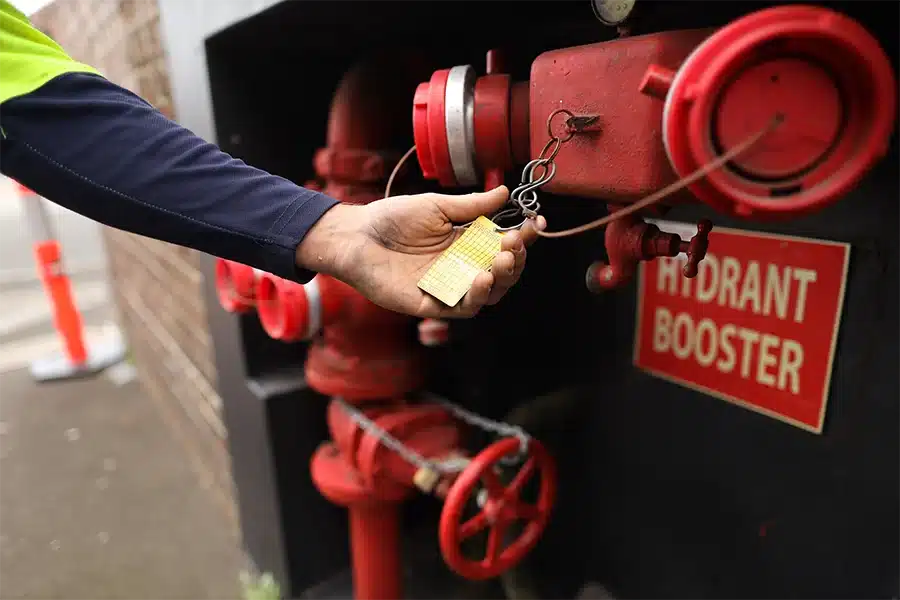
- Booster assembly tested, if applicable
- Hydrant Block Plan installed, if applicable
Fire Extinguishers
- Fire Extinguishers checked and serviced every 6-months
- Fire Extinguisher checked for correct pressure reading and expiry date
- Correct signage is installed to signal extinguisher location and type
- Most common extinguishers are due to be replaced or pressure tested every 5-years, some should be done annually
Sprinkler Systems
- Monthly Sprinkler inspections logged
- Annual valve and pump testing completed
- Sprinkler Block Plan installed and current
Passive Fire Protection
- Fire doors inspected and tagged, all hardware and gaps checked as required – 6-monthly
- Penetrations sealed
- Fire-rated walls intact
- Indices and materials as per the original construction
- Passive Fire Inspections completed annually
Passive fire compliance is one of the most commonly overlooked risk areas, as doors, fire-rated walls and penetrations may deteriorate over time exposing owners to risk and liability.
Emergency & Exit Lighting
- 6-monthly 90-minute discharge test completed
- Annual 90-minute discharge test completed
- Failed fittings reported and replaced as required
Emergency Exit Lights must be permanently illuminated at all times by mains power, in addition to the battery back-up for emergencies
Means of Egress
- Quarterly inspection of all paths of travel to exits
- Quarterly inspection of all exit doors including, hardware and closers
- Owners & Occupiers must ensure all exit doors are easily accessible and not obstructed in any way
- Means of Egress checks are a requirement under the Building Commission of Victoria
Exit doors that are blocked, difficult to open, or fitted with extra locks or incorrect hardware will be flagged as non-compliant. As a general rule, doors should be able to be opened with a single motion – meaning one point of contact only.
Evacuation Diagrams & Procedures
- Diagrams reflect current floor layout
- Fire safety equipment and emergency exits marked on plans
- Emergency Assembly Area and paths of travel marked
- Evacuation procedures in place
- Evacuation Diagrams in date and reviewed within the last 5-years
Evacuation diagrams should be installed at suitable locations throughout the building where they may be visible to occupants.

3. Documentation: Streamline the process
Servicing alone does not equal compliance, sufficient reporting must be completed and kept readily available.
As part of our service we keep:
- A centralised record of all service reports, status of each asset and the most recent AESMR
- Documentation on all outstanding defects
- Evidence of rectification any works
- Details of the responsible person or contractor for each item listed on the Occupancy Permit
- Where possible, we will keep a copy of the Occupancy Permit
Fragmented contractor reports are one of the biggest causes of compliance failure, which is why we recommend engaging one contractor who can carry out all required services, inspections and repairs.

4. Common Issues We See
When taking over new properties, the most frequent problems include:
- Incomplete or fragmented inspection & testing documentation
- Missing hydrant flow test documentation
- Means of Egress inspections not completed or missed
- Fire Doors replaced with non fire-rated doors, or fire doors missing compliance tags
- Passive fire defects neglected and not flagged, noting different requirements for pre vs post 1994 buildings
- Outstanding defects left unresolved
- Outdated evacuation diagrams
Most of these are preventable with structured compliance management.
5. Budget for Compliance, Not Emergencies
Reactive compliance costs significantly more than planned maintenance.
Smart property managers:
- Forecast annual servicing costs and have an annual agreement in place for all required ESM services
- Budget for defect rectification to cover common issues
- Prioritise repairs based on severity and urgency
- Engage a trusted partner to manage ESM on your behalf, such as Compliance Services
Neglecting Fire Safety and Building Compliance long-term can result in costly repairs for defective equipment down the track as well as council infringement notices for failure to make available an AESMR.

Final Thought
Fire safety compliance is not just about meeting standards – it’s about protecting occupants, reducing liability, and ensuring your building can withstand regulatory scrutiny.
If you’re unsure whether your property is fully compliant for 2026, a structured review can identify risks before they become costly issues.
Need a compliance health check?
Contact Compliance Services to obtain a no-obligation free quote to cover all of your annual Essential Safety Measures services and inspections, and achieve peace of mind knowing your asset is protected.